Howe Street Early Learning Centre
Our Programme
Our Principles
Empowerment
The early childhood curriculum empowers the
children to learn and to grow.
Family and Community
Children learn through responsive and reciprocal relationships with people, places, and things.
Holistic Development
Montessori Philosophy gives a foundation for children’s all round development.
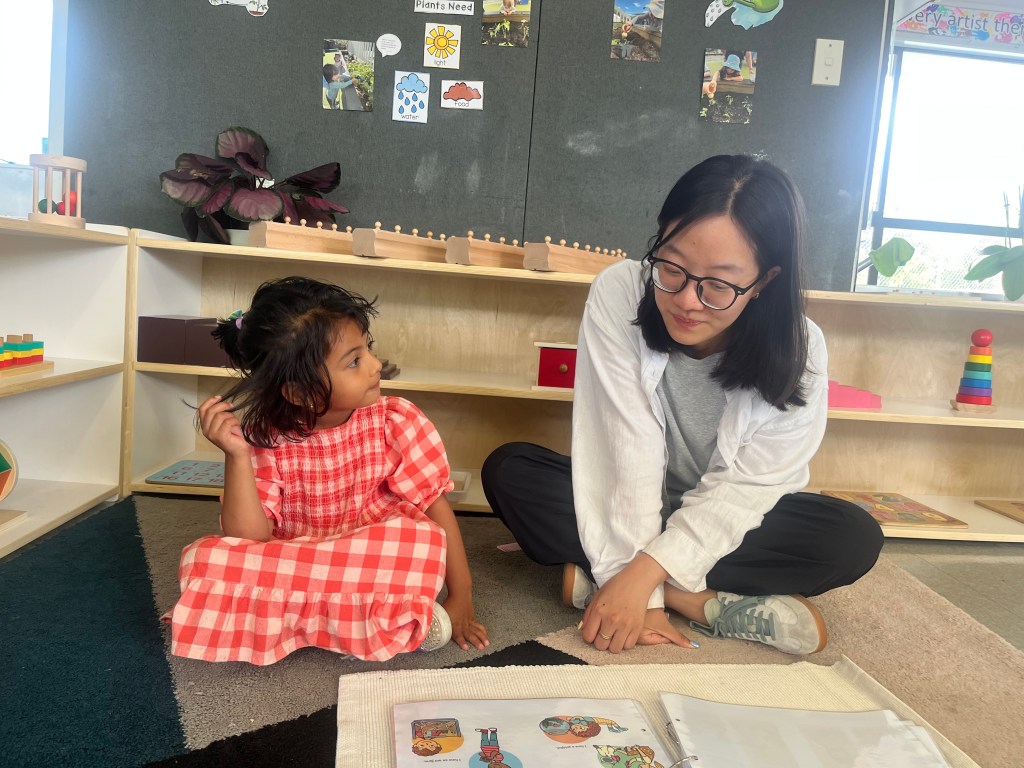
Sensory Engagement
Children learns the most when they are self involved in the guided activities they love.
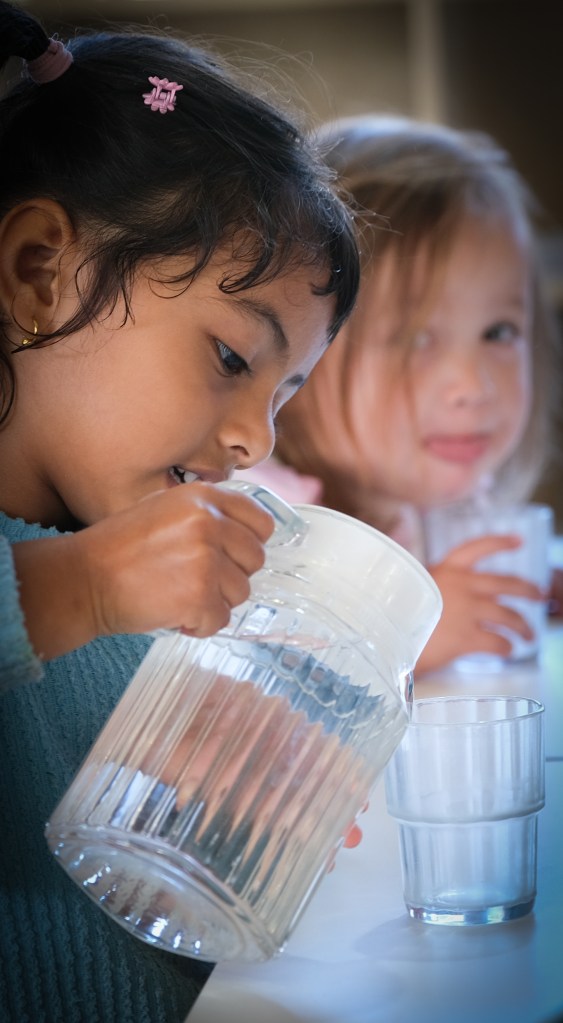
Montessori Philosophy
Principles of Montessori Education
Montessori Methodology is based on self-directed activity, hands-on learning and collaborative play. The methodology is based on Dr. Maria Montessori’s scientific observation about how children learn as they progress from birth to adulthood. Every material used in the Montessori environment is specifically designed, chosen and engineered to provide children with opportunities to stimulate curiosity, encourage discovery and support a particular aspect of child development based on individual developmental needs.
Sensitive Periods
From birth to age six, a child passes through different stages in their development, a window of opportunity in which they learn specific skills. These periods are referred to as ‘sensitive periods’ in Montessori education. During these periods, the child will be passionately absorbed with one aspect of the environment; this moment enables a child to acquire a specific skill set, character trait or behaviour without any apparent effort. These periods are universal for children of all cultures and the sensitive periods are characterised by order (age 1-3), language (age 0-6), refinement of the senses (age 2-4) and refinement of movement (age 2-4 ½).
The Absorbent Mind
The “absorbent mind” is the mind’s capacity to take in information and sensations from the world that surrounds it, this information is unconsciously absorbed by the child and used to shape who they become. Within a few years, a child learns to move and control their body, talk and communicate ideas, and soon gain independence.
Role of a Montessori Teacher
The role of the teacher is to understand child development, plan and support children’s learning by observing and being mindful of children’s changing interests and needs.
Montessori Materials
Dr. Montessori used what she knew about the senses to develop a series of sensorial materials for young children, these materials were designed to isolate one skill and to be self-correcting. This allows the child to concentrate their efforts and encourage independence in their own learning.
Prepared Environment
Dr. Maria Montessori believed the experience provided for children should be hands-on (and modern science has affirmed) that moving and learning are inseparable. In the prepared classroom, children work with specially designed manipulative materials that invite exploration and engage the senses in the process of learning.
Normalisation
Normalisation in the Montessori environment is refer to the focus, concentration, and independence of the children, by their own choice, for a sustained period of time. It means they have acquired the internal freedom to initiate work, be independent, and adhere (by choice) to the rules of the environment.
A well-prepared Montessori environment facilitates the process of normalization by offering engaging, hands-on materials, three-hour work cycles, and minimizing the disruption of concentration.
Five Curriculum Areas
The Montessori Curriculum is divided into five key areas of learning: Practical Life, Sensorial, Mathematics, Language and Culture. Each curriculum area has a dedicated space in the prepared environment.
Practical Life
The Practical Life area is the foundation of Montessori philosophy. The purpose is to help the children develop co-ordination, concentration, a sense of personal independence and a sense of order. The precise movements of the Practical Life material challenge the child to concentrate, work at their own pace uninterrupted and to complete a cycle of work which typically results in the feelings of satisfaction and confidences.
There are four categories of Practical Life
– Care of a Person: dressing, washing hands, toileting hygiene, hanging up their coat and polishing their shoes.
– Care of the Environment: washing tables, folding napkins, dusting, plant and animal care.
– Grace and Courtesy; greetings, classroom walking and talking, shaking hands and classroom manners.
– Control of Movement: walking the line and silence game.
Sensorial
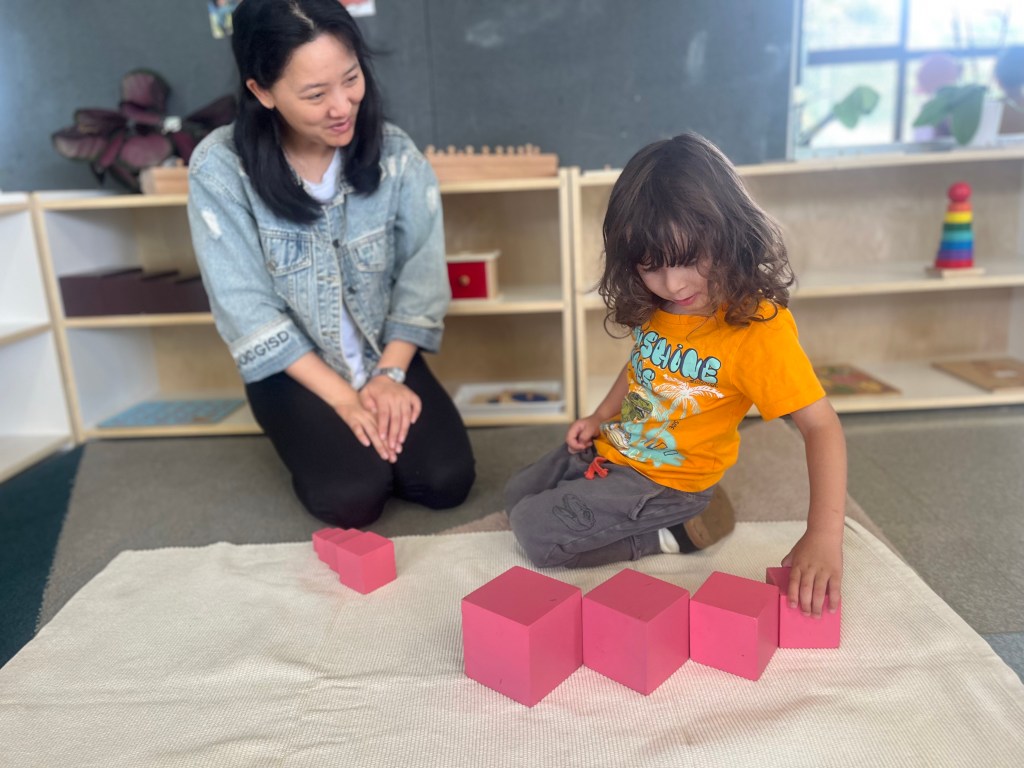
Sensorial Exercises in the Montessori classroom are designed to help a child’s sensory integration. Sensory integration is the way the nervous system processes information from the senses. When sensations flow in an organized manner, the brain can use these sensations to form perceptions, behaviour, and learning. These include sensorial exercises such as gradations of colour, dimension, sound, tactile impressions, comparisons of smell and taste, geography, and geometry.
Mathematics
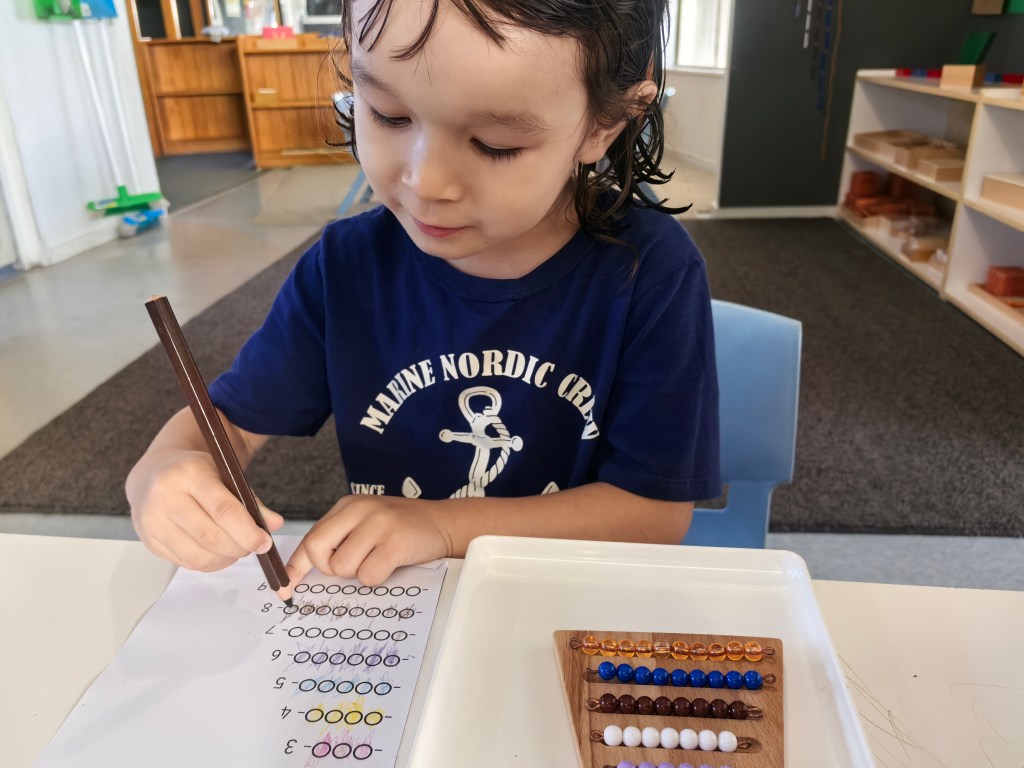
Mathematical concepts are introduced to children at very early age, it is introduced by using concrete sensorial materials that children can hold in their hands. These materials help children understand basic math concepts such as shape and number recognition, counting and concepts of 2 and 3 dimensions. These materials are symbolic, and that symbolism changes over time until children are ready to explore the materials and find solutions on paper or even in their heads.
Language
Children are able to absorb language from their environment and easily learn how to speak, read and write if language is present in their environment from age 0-6, in which Dr. Montessori refers to as sensitive period for language. Language material such as sandpaper letters, moveable alphabet or phonetic object games are also used in the environment which are designed to expand children’s vocabulary and explore spoken and written language.
Culture
Culture allows the child to explore the natural world around them and includes:
Science and nature
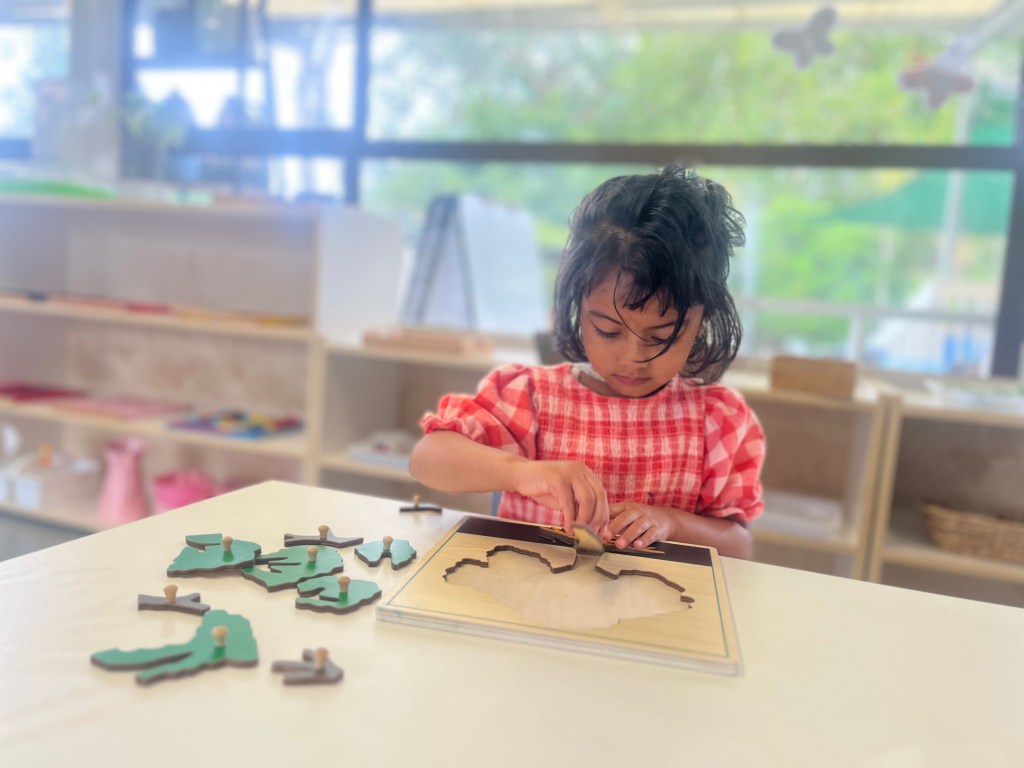
– Geography which include topics such as continents, landforms, earth layers, and the solar system
– Botany which includes topics such as ecology, classification, and physiology of plants
– Zoology which includes topics such as classification, and the physiology of animals
– History which includes; time lines and using a calendar
– Arts and Music
Five Strands of Te Whāriki
The strands and goals arise from the four principles. Te Whāriki is woven from these four principles and from the following five strands, or essential areas of learning and development. The principles and strands together form the framework for the curriculum. Each strand has several goals. Learning outcomes have been developed for each goal in each of the strands, which means Te Whāriki becomes an integrated foundation for every child’s development.
Strand 1
Well-Being – Mana Atua
The health and well-being of the child are protected and nurtured.
- Their health is promoted
- Their emotional well-being is nurtured
- They are kept safe from harm
Strand 2
Belonging – Mana Whenua
Children and their families feel a sense of belonging.
- Connecting links with the family and the wider world are affirmed and extended
- They know that they have a place
- They feel comfortable with the routines, customs, and regular events
- They know the limits and boundaries of acceptable behaviour
Strand 3
Contribution – Mana Tangata
Opportunities for learning are equitable, and each child’s contribution is valued.
- There are equitable opportunities for learning, irrespective of gender ability, age, ethnicity, or background
- They are affirmed as individuals
- They are encouraged to learn with and alongside others
Strand 4
Communication – Mana Reo
The languages and symbols of their own and other cultures are promoted and protected.
- They develop non-verbal communication skills for a range of purposes
- They develop verbal communication skills for a range of purposes
- They experience the stories and symbols of their own and other cultures
- They discover and develop different ways to be creative and expressive
Strand 5
Exploration – Mana Aotūroa
The child learns through active exploration of the environment.
- Their play is valued as meaningful learning and importance of spontaneous play is recognized
- They gain confidence in and control of their bodies
- They learn strategies for active exploration, thinking, and reasoning
- They develop working theories for making sense of the natural, social, physical and material worlds
 Howe Street Early Learning Centre